
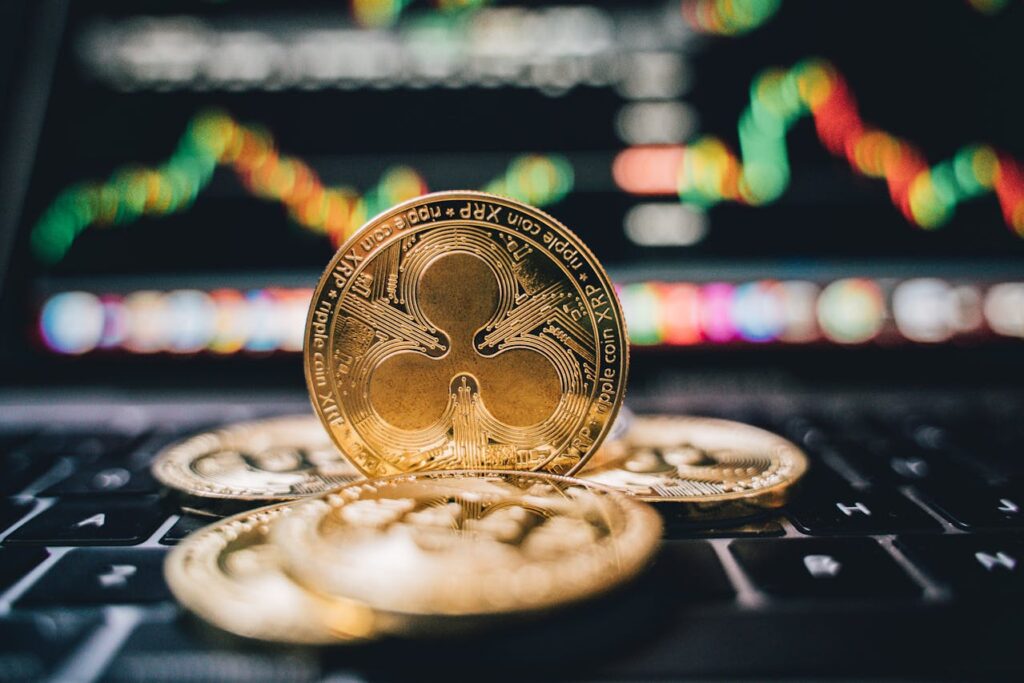
XRP is a digital asset native to the XRP Ledger (XRPL), a public, open-source blockchain designed for fast, low-cost value transfer.
The network emphasizes payments—especially cross-border remittances, liquidity management, and on-ledger asset issuance—while maintaining
minimal energy usage compared to proof-of-work systems.
Quick Facts
- Purpose: Efficient transfer of value and bridge asset for currency exchange.
- Network: XRP Ledger (XRPL), a decentralized, public blockchain.
- Consensus: Unique Node List (UNL)–based Byzantine agreement, not mining.
- Finality: Typically 3–5 seconds per ledger close under normal conditions.
- Fees: Fractions of a cent, dynamically adjusted to mitigate spam.
- Supply: Fixed at genesis; no new XRP is minted.
What Makes XRPL Different?
Most blockchains either rely on energy-intensive mining or stake-based selection to validate transactions.
XRPL uses a consensus protocol where independent validators agree on the order and outcome of transactions.
Participants can choose which validators they trust by composing a UNL, and the network reaches agreement when a supermajority of overlapping trusted nodes confirms a ledger.
Performance and Costs
XRPL’s design targets high throughput with deterministic finality. Payments typically settle within a few seconds,
and the minimal network fee discourages spam while keeping routine transfers affordable for end users and enterprises.
XRP, the Asset
XRP serves several roles on XRPL:
- Medium of Exchange: Enables rapid peer-to-peer payments and merchant settlement.
- Bridge Currency: Helps convert between illiquid currency pairs by routing through XRP.
- Spam Mitigation: A tiny amount of XRP is burned as a fee per transaction, aligning incentives and preserving network health.
On-Ledger Features You Can Use
- Payments: Standard value transfers with memos and destination tags for routing.
- Decentralized Exchange (DEX): Built-in order books allow on-ledger currency trades, including IOUs issued by gateways.
- Issued Currencies: Gateways and institutions can issue fiat- or commodity-pegged tokens.
- Escrow & Payment Channels: Conditional and time-locked payments, plus streaming-like micro-settlements.
- Multi-sign & Account Settings: Flexible controls for security and spend management.
- Hooks & Smart Features (where supported): Lightweight programmability proposals/extensions that can enable custom logic at the account level.
Typical Use Cases
- Cross-Border Remittances: Settlement in seconds can reduce pre-funding and improve user experience.
- Treasury & Liquidity: Using XRP as a bridge can aggregate fragmented liquidity and lower FX friction.
- Micropayments: Low fees enable small, frequent transfers (e.g., pay-per-API-call, pay-per-article).
- Tokenization: Representing real-world value (IOUs, stablecoins) for on-ledger exchange and settlement.
Tokenomics & Supply Characteristics
XRP’s total supply was created at network inception and is capped. A negligible amount is destroyed with each transaction fee,
causing a slow decline in total supply over time. There is no mining; distribution occurs via markets, programmatic releases (historically),
company holdings, and secondary sales. Always consult current disclosures for precise figures before making financial decisions.
Governance & Decentralization
XRPL does not have a single authority that unilaterally controls the ledger. Anyone can run a node, propose transactions,
or operate a validator. Decentralization emerges from diverse validator operators—exchanges, infrastructure providers,
independent developers, and organizations—whose UNLs overlap sufficiently to achieve reliable quorum.
Risks & Considerations
- Market Volatility: XRP’s price can fluctuate significantly.
- Regulatory Uncertainty: Laws and enforcement approaches evolve; monitor legal developments in your jurisdiction.
- Counterparty Risk for IOUs: Issued currencies on XRPL depend on the solvency and honesty of the issuer.
- Operational Security: Private keys, wallet selection, and secure custody practices are critical.
- Protocol Changes: Amendments can add features or alter behavior; stay informed before adopting new capabilities.
Getting Started
- Choose a Wallet: Use a reputable non-custodial or custodial wallet that supports XRPL features you need.
- Fund the Account: A small XRP reserve is required to activate an XRPL account and enable certain features.
- Test First: Experiment on a test network (if available) before moving significant value.
- Explore the DEX: Learn order types, liquidity, and issued-currency trust lines.
- Secure Your Keys: Back up seed phrases, enable multi-sign where appropriate, and verify recipients carefully.
FAQ
Is XRP the same as Ripple?
No. XRP is a digital asset; Ripple is a company that develops software and contributes to the XRPL ecosystem,
among other activities. The ledger itself is open-source and community-maintained.
How fast are transactions?
Under normal conditions, ledger closes finalize in a few seconds end-to-end, with very low fees.
Can I run my own node?
Yes. Running a rippled server lets you query the network directly. Operating a validator is also possible if you meet
reliability and network requirements.
XRP and the XRP Ledger focus on practical, high-throughput payments with built-in exchange and tokenization features.
Their strengths are speed, predictable finality, and low fees. As with any crypto asset, success depends on thoughtful
security, compliance with local laws, and clear understanding of the protocol’s capabilities and trade-offs.
Disclaimer: This article is educational and not financial or legal advice. Always do your own research.