
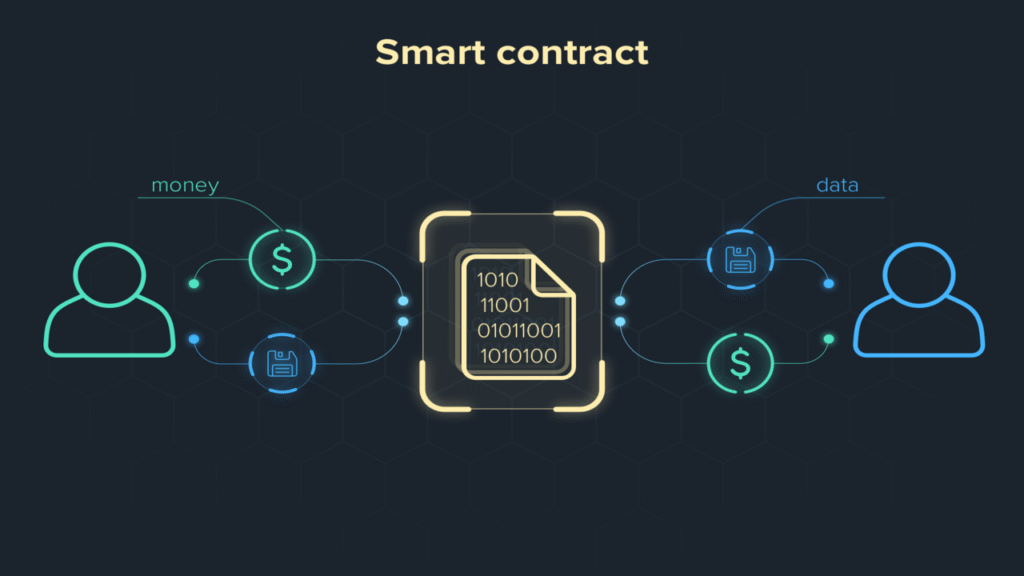
Smart contracts are self-executing agreements encoded on a blockchain. They automatically enforce rules and outcomes
once predefined conditions are met, eliminating the need for intermediaries. By combining transparency, automation,
and security, smart contracts have become a cornerstone of decentralized applications (dApps) and blockchain innovation.
What Are Smart Contracts?
A smart contract is essentially computer code deployed on a blockchain that manages digital agreements.
Once conditions written into the contract are fulfilled, the program executes automatically. For example,
a smart contract can release payment when goods are delivered, transfer tokens in a trade, or trigger a vote outcome.
Key Characteristics
- Automation: Executes agreements without manual intervention.
- Transparency: Rules and logic are visible on the blockchain, fostering trust.
- Immutability: Once deployed, smart contracts cannot be altered, ensuring predictability.
- Security: Operates on decentralized networks, reducing risks of fraud or tampering.
- Cost Efficiency: Reduces reliance on middlemen and associated costs.
How Smart Contracts Work
- Creation: Developers write contract code, typically in languages like Solidity (for Ethereum).
- Deployment: The code is uploaded to the blockchain, where it receives a unique address.
- Execution: When conditions are met (e.g., funds deposited), the contract self-executes.
- Finality: Outcomes are recorded on-chain, making them verifiable and irreversible.
Use Cases of Smart Contracts
- Decentralized Finance (DeFi): Enables lending, borrowing, and trading without banks.
- Tokenization: Issues and manages digital assets, including NFTs and stablecoins.
- Supply Chain: Automates tracking, verification, and payments across logistics networks.
- Gaming: Facilitates fair asset ownership and in-game economies.
- Voting Systems: Ensures secure and transparent elections through blockchain-based ballots.
- Insurance: Automates claims processing based on verified real-world events.
Benefits
Smart contracts reduce operational costs, minimize human error, and provide global accessibility.
Their trustless nature ensures that agreements are honored without requiring mutual trust between parties.
Challenges and Limitations
- Code Vulnerabilities: Bugs or exploits in code can lead to financial losses.
- Immutability: While a strength, it can be problematic if a flawed contract is deployed.
- Scalability: Heavy network usage can increase fees and slow execution.
- Legal Recognition: Many jurisdictions still lack clear frameworks for smart contract enforceability.
- Oracle Dependence: Contracts requiring real-world data rely on external oracle services, which must remain secure and decentralized.
Future Outlook
As blockchain ecosystems evolve, smart contracts are expected to become more powerful and accessible.
Innovations like layer-2 scaling solutions, formal verification of code, and quantum-resistant cryptography
aim to strengthen their reliability. Additionally, greater integration with traditional industries
may lead to widespread adoption beyond cryptocurrency.
Smart contracts are revolutionizing digital agreements by removing intermediaries and enabling trustless, automated interactions.
Despite challenges such as scalability and security risks, they remain one of the most transformative innovations in blockchain.
As technology advances, smart contracts will likely play an even greater role in shaping decentralized economies and digital governance.
Disclaimer: This article is for informational purposes only and should not be considered financial, technical, or legal advice.